Artists / Artist
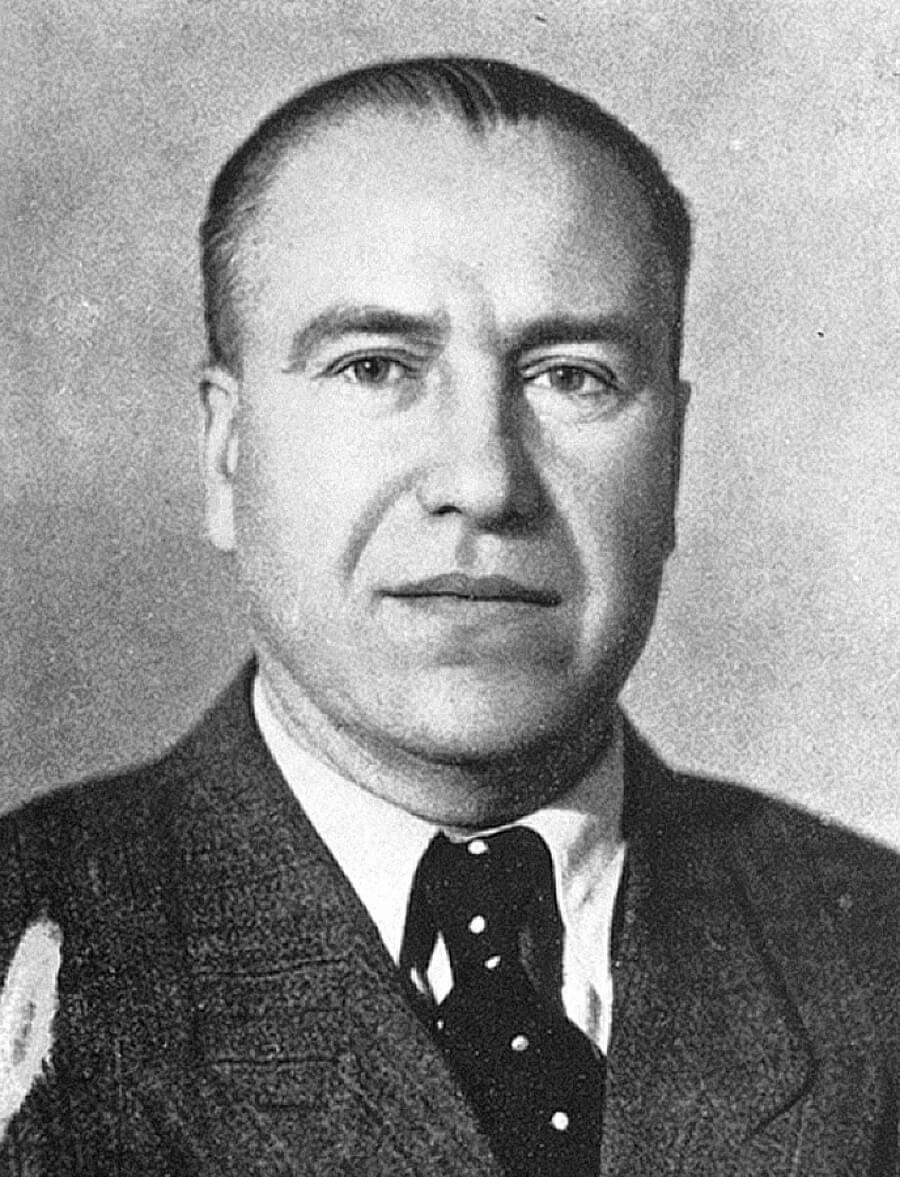
Deineka Alexander
Painter, graphic artist, sculptor, monumental artist. His individual style was characterized by a dynamic rhythm, emphasized objectivity and love of sharp angles. Deineka added to his painting the graphical interpretation of forms, that is why his easel paintings were close to the art of the poster. The main themes of Deineka’s creativity were industrialization, sport, and revolutionary history. He created mosaics for the foyer of the lecture hall at Moscow University (1956), the foyer at the Kremlin Palace of Congresses (1961).
Born in 1899 in Kursk, Russia.
In 1915 – moved to Kharkov, entered Kharkov Art College, where he studied under M. P. Pestrikov and A. M. Lyubimov.
In 1918 3- returned to Kursk. For some time he worked as a photographer in the Criminal Investigation Department, headed the section of the Art at the Regional Educational Department.
In 1921 – was art education at the faculty of printing art the Higher State Artistic and Technical Workshops (VKhUTEMAS). He studied under V. A. Favorsky and I. I. Nivinsky.
At the same time he met V. V. Mayakovsky. In 1924 Deineka as a participant of the Group of Three (A. A. Deineka, Y. I. Pimenov, and A. D. Goncharov) took part in the First discussion exhibition.
Since mid 1920s – was worked a lot in the field of magazine and poster graphic art, collaborated with magazines Bezbozhnik u Stanka (Atheist at the Machine), Projector, Krasnaya Niva (“The Red Field”).
In 1925 – was one of the organizers of the Society of Easel Artists (OST).
In 1929 – left the Society of Easel Artists and joined art society “October”.
In 1931–1932 he became a member of the Russian Association of proletarian artists.
Since 1928-1930 – he lectured at the Higher Art Technical Institute and Moscow Polygraphic Institute at the department of poster art (till 1934).
Since 1934-1946 – lectured at Moscow Art Institute named after V. I. Surikov.
In 1945-1952 – was lectured at Moscow Institute of Applied and Decorative Arts.
Artist`s works are in many museum collections, including the State Tretyakov Gallery, the State Russian Museum, the Pushkin State Museum of Fine Arts, and Kursk Regional Art Gallery named after A. A. Deineka and others.
He died in 1969 in Moscow, Russia.
Recommended products
Contacts
artsellbuy@gmail.com
artsellbuy